


The Middle East is engulfed in its most serious military crisis in decades. Following a joint US-Israel offensive that killed Iran’s Supreme Leader Ali Khamenei on February 28, 2026, Iran launched sweeping retaliatory strikes across the Gulf — targeting US military bases in UAE, Bahrain, Kuwait, and Iraq. More than 1,850 people have been killed across all sides. Global oil prices are surging. Airspace across the region has been shut down.
Here are the five most important things to understand about what is happening — and why it matters for the entire world.
Five Things to Know
What Started This
The US and Israel launched a massive offensive against Iran on Feb. 28 — killing its Supreme Leader
The United States and Israel launched coordinated military strikes against Iran on February 28, 2026, targeting nuclear facilities, military infrastructure, and senior leadership. The offensive killed Supreme Leader Ali Khamenei when his compound in Tehran was destroyed in a precision airstrike.
More than 1,330 Iranian civilians were killed in the initial strikes. Hospitals, schools, and residential neighborhoods were damaged. Iran’s government — and most of the world — called it an unprovoked act of war against a sovereign nation. Washington and Jerusalem described it as a necessary preemptive action against a nuclear threat.
“This operation will continue relentlessly until the enemy is decisively defeated.”
— Islamic Revolutionary Guard Corps (IRGC) official statement
Iran’s response was swift. Within hours, the Islamic Revolutionary Guard Corps launched one of the largest retaliatory military operations in recent Middle Eastern history.
Where Iran Struck
Missiles and drones hit US military bases across five Gulf nations simultaneously
Iran’s strikes were not random — they were systematically directed at every major US military installation in the region. The four primary targets were:
UAE — 165 missiles, 541 drones
Bahrain — Fifth Fleet HQ hit
Kuwait — Ali al-Salem Air Base
Iraq — Erbil Airport targeted twice
The UAE faced the largest single barrage: 165 ballistic missiles, 2 cruise missiles and 541 armed drones. Most were intercepted, but 21 drones broke through, killing three migrant workers and igniting a fire at the Ruwais refinery — which normally produces 922,000 barrels of oil per day.
In Bahrain, Iran struck the US Navy’s Fifth Fleet headquarters directly. Kuwait’s Ali al-Salem Air Base — a critical US Air Force hub — was hit by ballistic missiles. A drone also struck Kuwait International Airport, injuring workers and damaging the terminal.
The Human Cost
More than 1,850 confirmed dead across all sides — and the toll is still rising
The human cost of this conflict has reached devastating proportions in a very short period of time. Iranian civilian deaths from the original US-Israeli offensive stand at over 1,330, with more than 100,000 people displaced from their homes.
Confirmed Casualties by Country
Iran (civilians)1,330+ killed
Kuwait11 killed
UAE4 killed
Oman3 killed
Saudi Arabia2 killed
Bahrain1 killed
US Military13 killed, ~140 wounded
Among US casualties, six Army reservists were killed in a single drone attack at Port Shuaiba, Kuwait — one of the deadliest single strikes on US forces in the Gulf in recent memory. Total confirmed deaths across all parties now exceed 1,850.
The Economic Shock
The Strait of Hormuz is under threat — and that affects every economy on earth
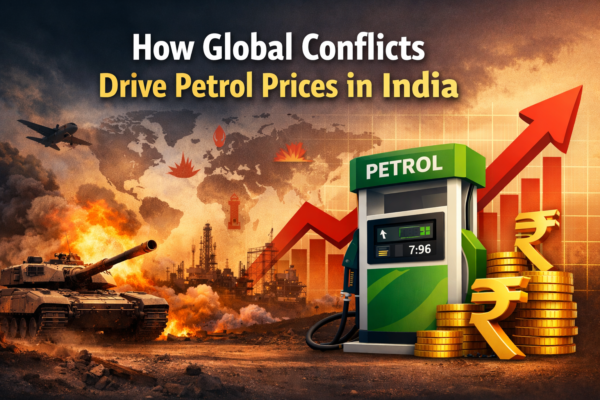
The conflict’s most far-reaching consequence may be economic. Iran threatened to close the Strait of Hormuz — the narrow waterway through which approximately one-fifth of all global oil passes every day. Seven countries shut their airspace, grounding dozens of international flights.
Iraq’s oil output from its three main southern oilfields fell by 70% immediately after the strikes. The UAE shut down the Ruwais refinery. Kuwait announced precautionary production cuts. Global oil futures surged on commodity markets. Qatar’s energy minister warned that a sustained conflict could halt Gulf energy exports entirely and “bring down economies of the world.”
“If this war continues, we may be forced to halt exports — and that could bring down economies of the world.”
— Qatar Energy Minister, March 2026
Shipping insurance rates for vessels in the Persian Gulf spiked. Several major carriers suspended Gulf routes. Financial markets in Asia, Europe and the United States all saw significant volatility.
What Comes Next
Iran has a new Supreme Leader — and the world is watching whether he escalates or backs down
Following the assassination of Khamenei, Iran rapidly named Mojtaba Khamenei — his son — as the new Supreme Leader, handing him control over the Revolutionary Guard and the nuclear program. One of the most consequential open questions of this crisis is what Mojtaba will do next.
Complicating matters: Iranian President Pezeshkian personally apologized to Gulf neighbors and ordered the military to stand down. The Revolutionary Guards ignored those orders and continued striking. This open defiance of the civilian president by the IRGC is one of the most significant moments of institutional breakdown in the Islamic Republic’s history.
Russia and China have called for a ceasefire and vetoed a US-drafted UN Security Council resolution condemning Iran’s strikes — deepening divisions between major powers. Arab foreign ministers strongly condemned the Gulf attacks, while non-aligned nations argued that Iran’s right to self-defense cannot be dismissed given that the US-Israeli offensive was itself the root cause.
The world is watching five questions: Will Mojtaba escalate or de-escalate? Will the Strait close? Will the US respond militarily to the Gulf strikes? Can the UN broker a ceasefire? And what happens to Iran’s civilian population as the conflict enters its fourth week?


Leave a Reply