


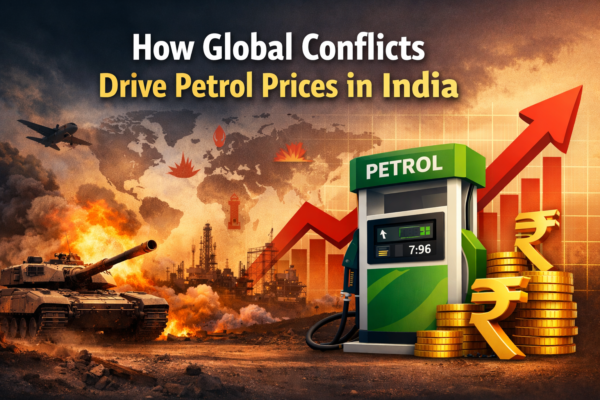
Global conflicts petrol prices India Every time a war breaks out somewhere in the world, Indians feel it at the fuel pump. This connection between global conflict and domestic petrol prices is not coincidental it is deeply structural, rooted in how India sources, refines, and prices its oil.
India’s Oil Dependency
India imports nearly 85% of its crude oil requirements, making it one of the largest oil importers in the world. The majority of this oil comes from the Middle East, a region that has historically been susceptible to geopolitical instability. When conflicts erupt whether in Iraq, Libya, or the broader Persian Gulf region supply chains are disrupted, shipping routes become uncertain, and global crude oil prices spike almost immediately.
How Wars Trigger Price Spikes
Oil markets are driven by both fundamentals and sentiment. Even before a single barrel of oil is physically affected by conflict, futures traders begin pricing in risk. This ‘war premium’ can add anywhere from $5 to $20 per barrel to oil prices within days of a major conflict. For India, which prices its petrol and diesel based on international crude benchmarks, this translates almost directly into higher pump prices for consumers.
The Cascading Effect on Indian Consumers
Global conflicts petrol prices India Higher petrol prices in India don’t just affect those who own vehicles. Transportation costs rise, which pushes up the price of goods, vegetables, and services. Inflation spreads through the economy like ripples in water. The Reserve Bank of India often has to recalibrate its monetary policy in response, sometimes raising interest rates to control inflation a move that slows economic growth and affects borrowers across the country.
Government Responses and Limitations
India’s government has a few tools at its disposal it can reduce excise duties on fuel, draw from strategic petroleum reserves, or negotiate long-term supply agreements with diversified suppliers. However, these measures have limits. Cutting excise duties reduces government revenue significantly, and strategic reserves cover only a few days of consumption. In a prolonged conflict scenario, India remains structurally vulnerable to oil price shocks.
Looking Ahead
India is actively working to reduce its oil dependency through investments in renewable energy, electric vehicles, and domestic oil exploration. But the transition will take decades. In the meantime, global conflicts will continue to shake India’s fuel economy and understanding this connection helps citizens and policymakers respond more effectively.



Leave a Reply